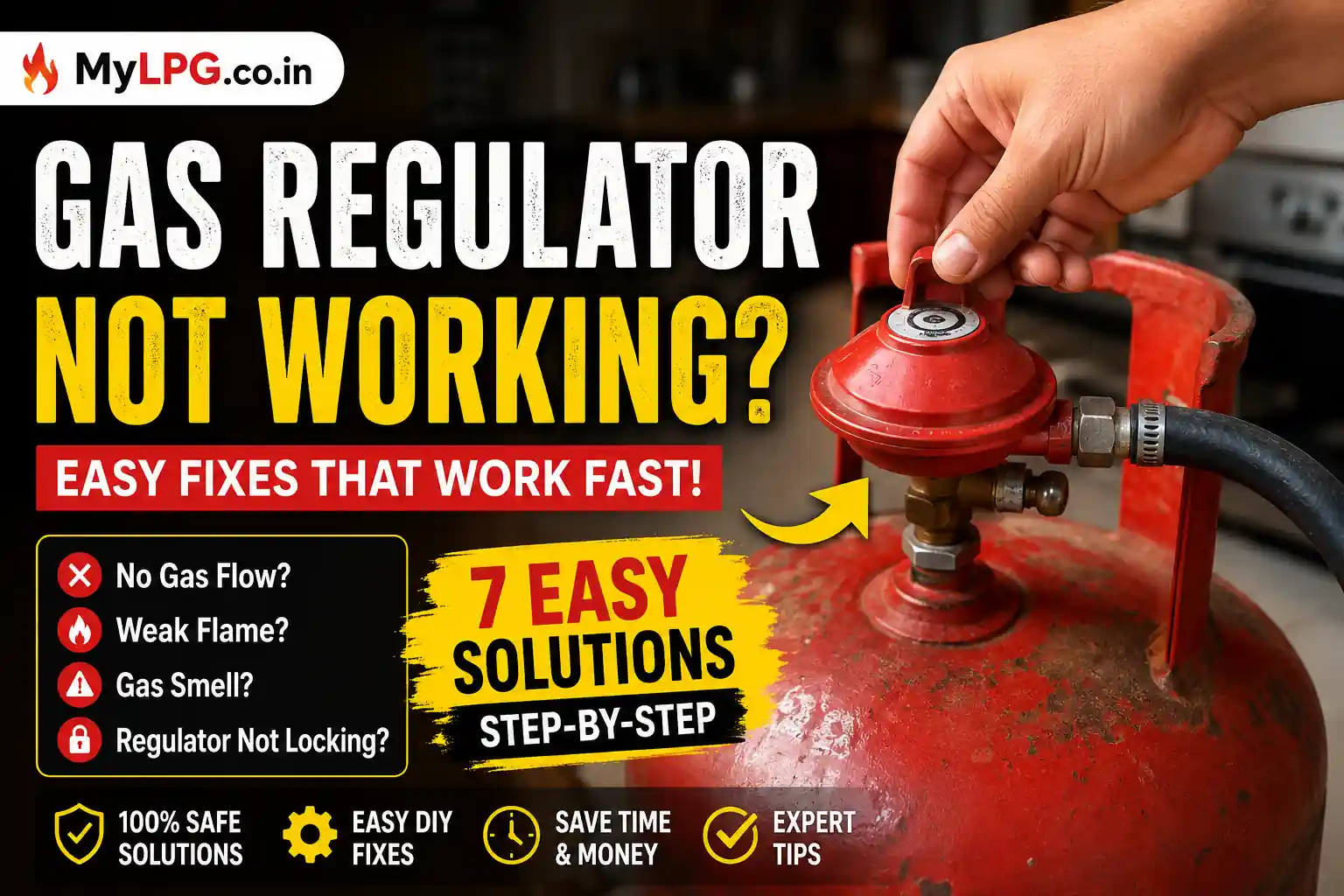
A gas regulator is an important part of an LPG connection because it controls the pressure of gas coming from the cylinder to the cooking appliance. When the regulator stops working, the burner may not receive gas properly, or the gas flow may become unusually weak.
Before trying anything, remember that an LPG regulator should not be opened, dismantled, repaired internally, or modified at home. Pressure regulators are safety equipment, and a defective unit should be inspected or replaced through the LPG distributor or a trained technician. Bharatgas technical guidance states that regulators that fail required performance or leakage tests are treated as defective.
What Does a Gas Regulator Do?
A gas regulator controls the pressure of LPG flowing from the cylinder to your stove. Without a properly functioning regulator, gas cannot reach the burners safely.
A regulator ensures:
- Safe gas pressure
- Consistent flame
- Efficient cooking
- Protection from sudden gas surges
When the regulator develops a fault, cooking becomes difficult and safety risks may increase.
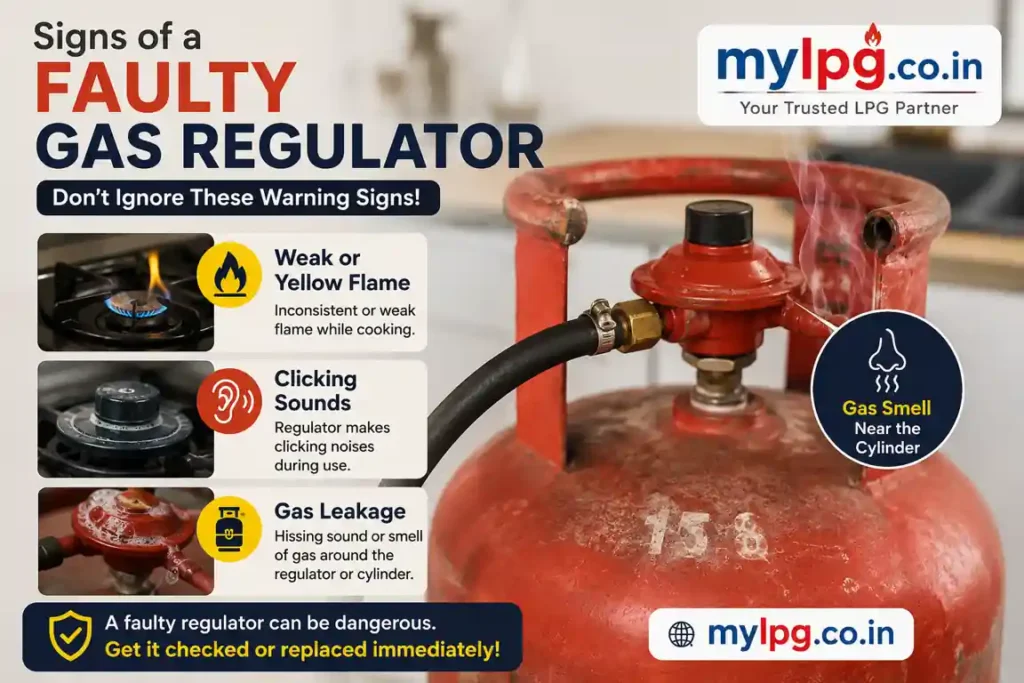
Common Signs of a Faulty Gas Regulator
Watch for these warning signs:
- No gas reaching burners
- Weak or yellow flame
- Regulator not locking properly
- Clicking sounds
- Gas smell near the cylinder
- Flame repeatedly going out
If you notice gas leakage symptoms, immediately read LPG Gas Cylinder Leak – Causes & Safety Tips before continuing.
1. Check Whether the Regulator Is Locked Properly
Many regulator complaints occur because the regulator is not attached correctly.
Steps
- Turn off all burners.
- Lift the regulator handle.
- Remove the regulator.
- Reconnect firmly.
- Push the handle down completely.
This simple step solves a surprising number of gas flow problems.
If your booking is delayed and you suspect the cylinder itself is empty, check Gas Booking History Check.
2. Confirm That the Cylinder Is Not Empty
Before blaming the regulator, verify that LPG is still available inside the cylinder.
Common signs of an empty cylinder:
- No flame at all
- Lightweight cylinder
- Recent heavy usage
You can also check current refill information through My LPG Status Check.
3. Inspect the Rubber Seal
The rubber seal inside the regulator creates an airtight connection.
A damaged seal may cause:
- Gas leakage
- Poor pressure
- Connection failure
If the seal appears cracked or worn, stop using the regulator immediately.
You should also know Gas Cylinder Expiry Date Check Kaise Kare because aging equipment increases safety risks.
4. Look for Blockages
Dust, oil, insects, or moisture can block gas flow.
Symptoms include:
- Low flame
- Delayed ignition
- Uneven burner performance
Never dismantle the regulator yourself.
Regular maintenance helps prevent such problems. Follow Gas Stove Cleaning and Maintenance Tips to keep your cooking system working efficiently.
5. Check the LPG Hose Pipe
Sometimes the regulator works perfectly, but the hose pipe becomes damaged.
Inspect for:
- Cracks
- Loose fittings
- Bends
- Aging rubber
A damaged pipe can restrict gas flow and create dangerous leaks.
For overall LPG safety, review LPG KYC Update Process and ensure your connection details are updated.
6. Reset the Regulator
A simple reset often fixes temporary issues.
How to Reset
- Turn off all burners.
- Remove the regulator.
- Wait for two minutes.
- Reattach securely.
- Test the stove.
If the problem continues, professional inspection may be required.
You can also review LPG Connection KYC Update Process to ensure there are no account-related service issues.
7. Replace an Old Regulator
Most regulators do not last forever.
Replace your regulator if:
- It is over 5–7 years old.
- Gas smell occurs regularly.
- Locking becomes difficult.
- Gas flow repeatedly stops.
For consumers considering a new setup, read Indane Gas New Connection Apply Online.
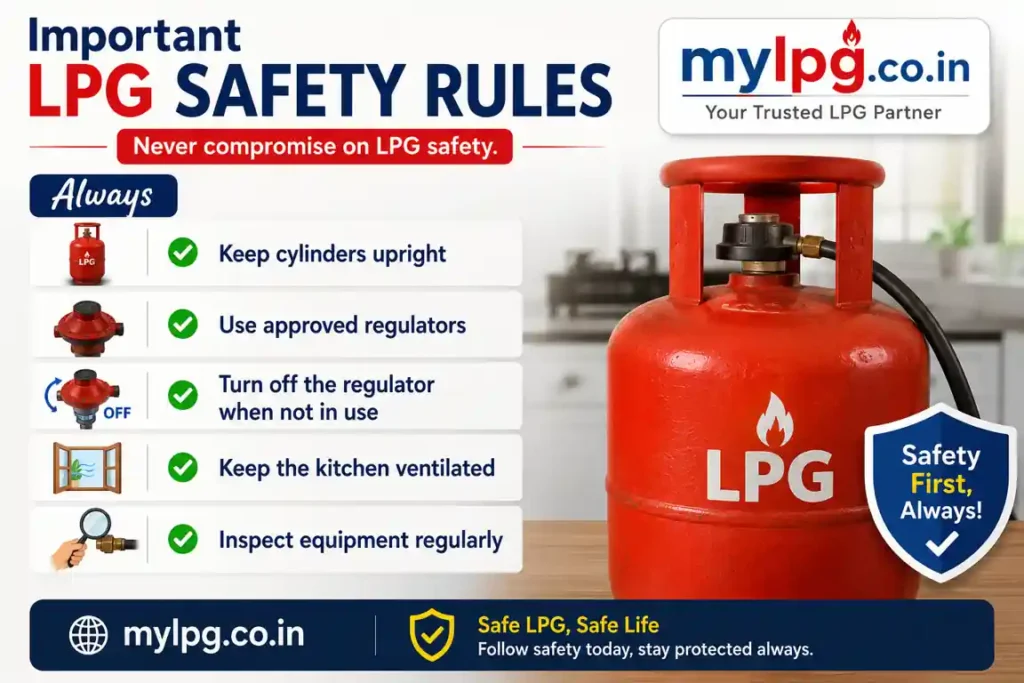
Important LPG Safety Rules
Never compromise on LPG safety.
Always
✔ Keep cylinders upright
✔ Use approved regulators
✔ Turn off the regulator when not in use
✔ Keep the kitchen ventilated
✔ Inspect equipment regularly
If you are unsure about cylinder condition, read 14.2 KG LPG Cylinder Guide.
Never
✘ Use open flames to detect leaks
✘ Repair regulators yourself
✘ Ignore gas smells
✘ Use damaged accessories
For emergency situations, understanding Gas Customer Care options can be helpful.
What To Do If You Smell Gas?
Follow these steps immediately:
- Turn off the regulator.
- Open all windows and doors.
- Do not operate electrical switches.
- Avoid mobile phone usage near the leak.
- Contact your LPG provider.
You can also learn how distributors handle complaints in LPG Grievance Portal Full Guide.
Gas Regulator Troubleshooting Table
| Problem | Possible Cause | Solution |
|---|---|---|
| No Gas Flow | Regulator not locked | Reconnect properly |
| Weak Flame | Blockage | Service inspection |
| Gas Smell | Damaged seal | Replace regulator |
| Regulator Loose | Wear and tear | Replace unit |
| Flame Goes Out | Low pressure | Check cylinder |
When Should You Call a Technician?
Call a technician when:
- Gas leakage continues
- Regulator cannot lock
- Gas smell persists
- Reset attempts fail
- Flame remains unstable
If delivery or cylinder quality seems suspicious, check Cylinder Damaged Mila To Kya Kare.
You may also want to know the LPG Cylinder Delivery Time India after ordering a replacement.
How to Prevent Future Regulator Problems
Preventive maintenance is easier than repairs.
Best Practices
- Clean the kitchen regularly
- Inspect the regulator monthly
- Replace old hose pipes
- Avoid forcing connections
- Schedule safety inspections
Consumers should also monitor Gas Booking OTP Not Received and Gas Booking System Down issues when arranging refills.
Conclusion
A faulty regulator does not always mean an expensive repair. In many cases, the issue is caused by an improper connection, damaged seal, blocked passage, or aging equipment. By following the troubleshooting steps above, most homeowners can quickly identify the problem and restore safe gas flow.
However, safety should always come first. If you notice persistent leakage, unusual smells, or repeated regulator failures, stop using the equipment and contact your LPG distributor immediately.
FAQs
The regulator may not be locked properly, the cylinder valve may be faulty, or the cylinder may be empty.
No. Gas regulators should only be repaired or replaced by authorized technicians.
Most regulators last between 5 and 7 years depending on usage and maintenance.
Turn off the regulator immediately, ventilate the area, and contact your distributor.
Yes. An inefficient regulator can affect gas flow and lead to poor burner performance.
📖 Read Also
- Read also: Gas Regulator Change Guide
- Read also: LPG Gas Cylinder Leak – Causes & Safety Tips
- Read also: Gas Cylinder Expiry Date Check Kaise Kare
- Read also: Gas Stove Cleaning and Maintenance Tips
- Read also: Gas Booking History Check
- Read also: LPG Grievance Portal Full Guide
- Read also: Indane Gas New Connection Apply Online
- Read also: LPG Cylinder Delivery Time India