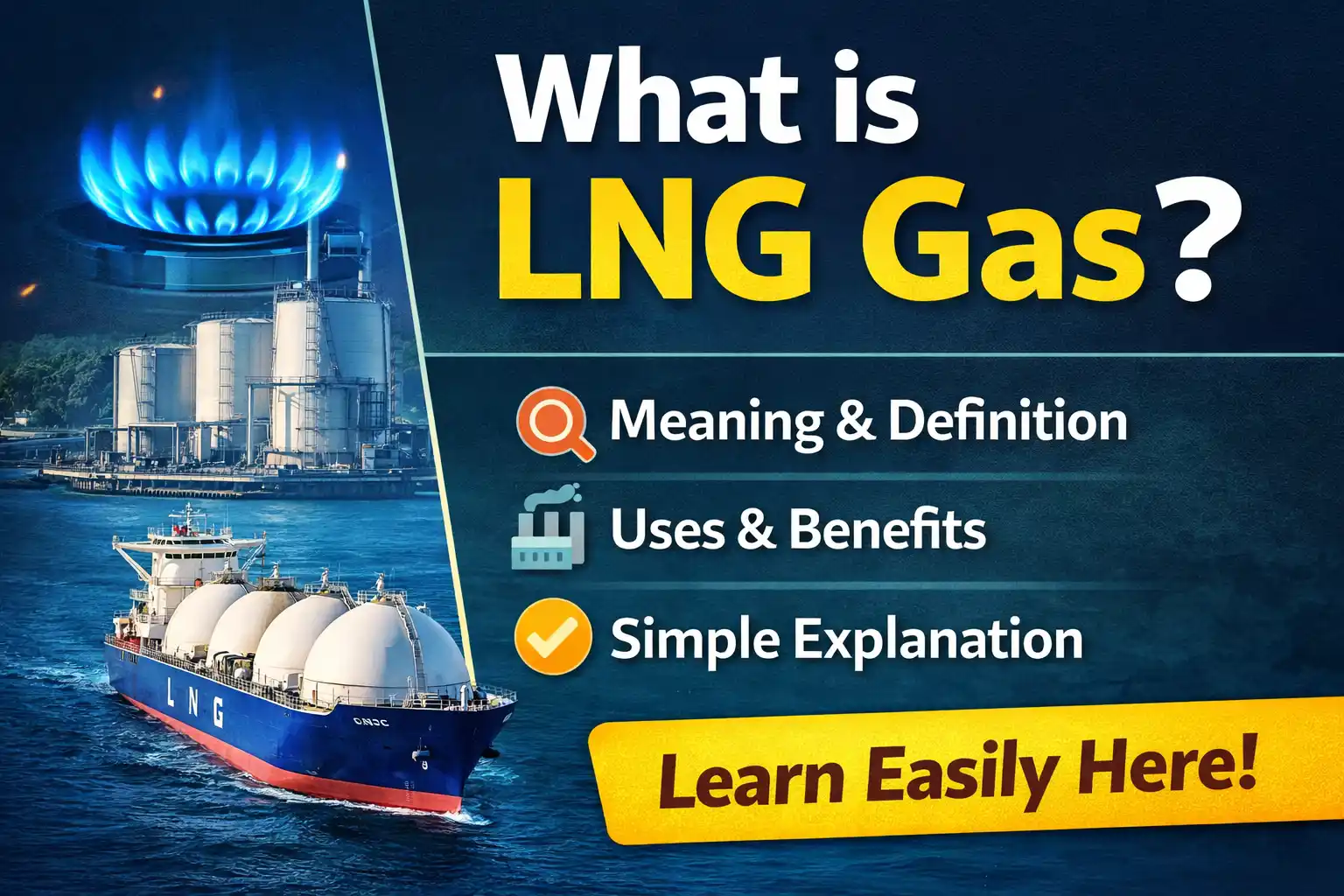
LNG (Liquefied Natural Gas) is natural gas that has been cooled down to about -162°C to turn it into liquid form.
In this liquid state, LNG takes up 600 times less space, making it easier to store and transport across long distances.
👉 Once it reaches its destination, LNG is converted back into gas and used as fuel.
⚙️ How LNG Works
Here’s a simple breakdown:
- Natural gas is extracted from underground
- It is purified to remove impurities
- Gas is cooled to -162°C → becomes liquid (LNG)
- Transported via special LNG ships or tankers
- Converted back to gas at receiving terminals
🌍 Uses of LNG Gas
LNG is widely used across different sectors:
- 🏠 Power generation
- 🚢 Shipping fuel
- 🏭 Industrial fuel
- 🚗 Transportation (LNG trucks & buses)
📊 LNG vs LPG (Quick Comparison)
| Feature | LNG | LPG |
|---|---|---|
| Full Form | Liquefied Natural Gas | Liquefied Petroleum Gas |
| Main Components | Methane | Propane & Butane |
| Storage Temp | -162°C | Normal pressure |
| Usage | Industry, transport | Cooking gas |
| Environmental Impact | Cleaner | Moderate |
🌱 Benefits of LNG
✔ Cleaner fuel (low carbon emissions)
✔ Efficient for long-distance transport
✔ Safer in liquid form
✔ Reduces air pollution
⚠️ Disadvantages of LNG
❌ Requires expensive infrastructure
❌ Needs very low temperature storage
❌ Risk if mishandled
📝 Conclusion
LNG (Liquefied Natural Gas) is a modern, cleaner energy source that plays a major role in today’s energy system. Its ability to be transported easily makes it highly valuable worldwide.
👉 As the world moves toward cleaner energy, LNG is becoming more important than ever.
Read Also:Iran Gas Field Attack: What Happened & Global Impact